Apprendre
Guides d'investissement
Articles courts et pratiques inspirés par des sujets courants d'académie d'investissement — allocation, ETF, risque et gestion multi-courtier. Séparé de la documentation de configuration du produit.
23 guidesEffacer les filtres
What Is a Cash ISA and How Does Tax-Free Savings Work
A plain-language guide to how a Cash ISA shelters interest from tax, the rules you must follow, and why it can fit long-term European goals.
Fiscalité · Bases

What Is an Initial Public Offering (IPO)?
A plain-language guide to how an IPO works, why companies use it, and what long-term European investors should know before buying shares at or after the offering price.
Actions · Bases

What Is Market Capitalization and Why It Matters for Investors
A practical guide to market capitalization, from the basic formula to how company size shapes risk, liquidity, and portfolio construction for long-term European investors.
Actions · Bases

What Are Stock Market Indices and How Are They Used?
A plain-language guide to what stock market indices are, how they are built and weighted, and why they matter for long-term European investors.
Indices · Bases

Understanding ETF Expense Ratios and Their Long-Term Impact
Learn what a TER is, what it covers, how it is deducted, and why small fee differences compound into large gaps over decades of investing.
ETF · Bases
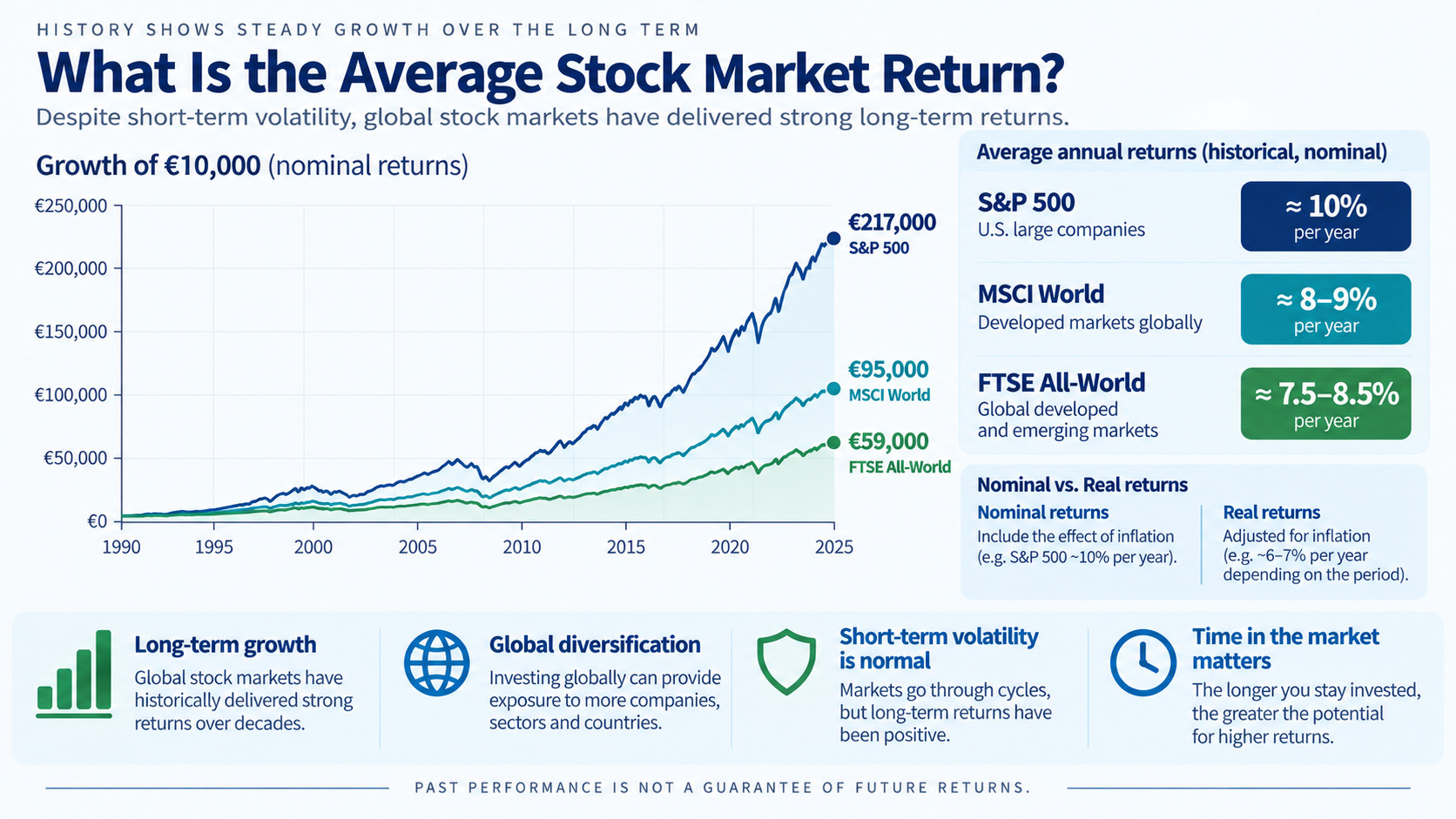
What Is the Average Stock Market Return and What Profits Can You Realistically Expect?
How long-term index history, inflation, and investor behaviour shape what a diversified portfolio has delivered.
Bases · Performance
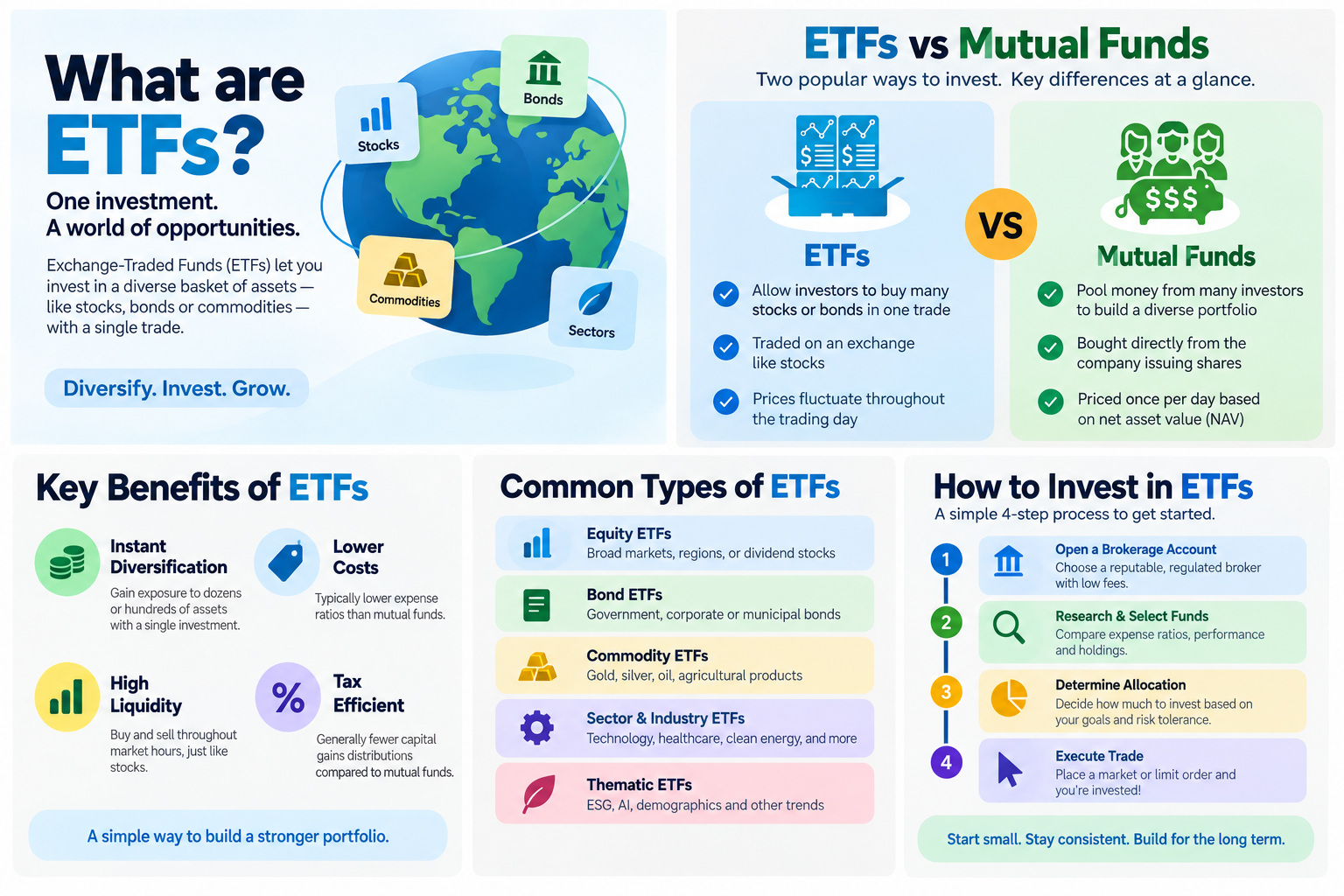
Investing in ETFs — a beginner's guide
How ETFs work, accumulating vs distributing, UCITS, costs, and how to choose and buy funds for a long-term portfolio.
Bases · ETF

What is asset allocation?
How to spread risk across stocks, bonds, cash, and other assets — and why a single-broker view can mislead you.
Bases · Allocation

Keeping a multi-broker portfolio tidy
Habits that reduce duplicate tickers, missing cost basis, and “ghost” cash when you invest across several apps.
Bases · Hygiène du portefeuille

What is an investment plan?
A beginner’s framework: goals, risk, what to buy, how often to contribute, and when to review.
Bases · Planification

How to build an investment portfolio
Step-by-step: goals, risk, asset classes, a simple allocation, low costs, automation, and rebalancing.
Bases · Portefeuille

What are ETFs?
Exchange-traded funds in plain language: how they work, why beginners use them, and what to check before buying.
Bases · ETF

Stocks vs ETFs: which should beginners use?
A clear comparison of single shares and funds — when each makes sense, and a sensible default for most people.
Bases · Actions · ETF

Risk tolerance: how much volatility can you live with?
Capacity vs willingness to take risk, simple self-checks, and how to translate answers into an allocation.
Bases · Risque
Diversification explained
Why spreading bets works, what “false diversification” looks like, and how to diversify without owning 80 tickers.
Bases · Diversification

Rebalancing your portfolio
What rebalancing is, calendar vs threshold methods, and how to do it with new contributions first.
Bases · Rééquilibrage

Dollar-cost averaging (and euro-cost averaging)
Why investing a fixed amount on a schedule reduces timing stress — and when a lump sum can still make sense.
Bases · Versements

Understanding dividends
What dividends are, yield vs growth, accumulating ETFs, and how dividends fit a total-return mindset.
Bases · Dividendes
Bonds and bond ETFs
Why bonds exist in a portfolio, duration and interest-rate risk in plain language, and how beginners usually get exposure via ETFs.
Bases · Obligations

Cash in a portfolio: drag or dry powder?
How much cash to keep, opportunity cost vs safety, and spotting idle balances scattered across brokers.
Bases · Liquidités

Bid, ask, and the spread
The language of prices on an exchange — and why spreads are a real cost for frequent traders.
Bases · Trading

Common beginner investing mistakes
Timing the market, chasing hype, ignoring fees, skipping the emergency fund, and other avoidable errors.
Bases · Comportement
Tracking portfolio performance
What to measure (returns, allocation, contributions), how to avoid false precision, and why one dashboard beats five apps.
Bases · Performance